 News
News
News
News
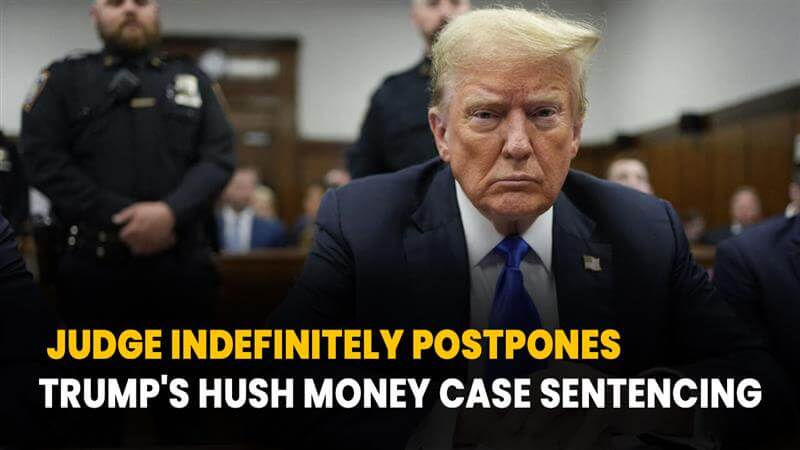
A New York judge has indefinitely put off former President Donald Trump’s sentencing in a criminal case. The case addresses claims of hush money paid to Stormy Daniels, an adult film star. The nation is watching as this judgment is made in a legal drama. As a result of this new information, the already complicated case against Trump has become more complex. Donald Trump was the first president to be found guilty of a crime.
The endless delay has generated great discussion on judicial history, executive immunity, and the overall condition of American democracy. Legal professionals, political analysts, and the general public are now facing some important questions. One of which is whether or not a former head of state may be put on trial and held accountable for their actions. Does executive power override legal responsibility? And most critically, what example does this delay set for future elected leaders?
In this WordsCraze analysis, we unpack the background of the case, the reasons behind the delay, and the legal and political consequences, along with what to expect next.
The Background: From Payoff to Court Case
The main issue emerged during the 2016 election race. Stormy Daniels (Stephanie Clifford) is a central figure in the case. She claimed that Trump’s former lawyer, Michael Cohen, paid her $130,000 in hush money to stay silent about her alleged affair. The payment was made just before Election Day, and the Trump Organization later compensated him for it.
Attorneys for the state argued that Trump deliberately altered business records to disguise the true nature of the payment, mislabeling it as legal fees. They claimed it violated New York’s election laws by breaking the state’s rule against forging official documents to carry out or conceal a crime.
On May 30, 2024, Trump was found guilty on 34 counts of criminal charges related to fabricating business records in the first degree. No former president had ever been criminally convicted in such a high-profile and significant case. This trial marked a historic shift in American legal precedent.
Initial Sentencing and Strategic Delays
The original sentencing date for Trump was July 11, 2024. The Republican National Convention was just a few days away. Trump’s lawyers requested a delay, citing unresolved legal issues. It included a possible Supreme Court decision on the president’s legal protections. The new date for the sentence was set for September 18, 2024. Yet again, Trump’s legal team filed motions asking for additional delays.
They said that under the Constitution, a former president, especially one who could be re-elected, should be treated differently. Another extension was granted by Judge Juan Merchan, rescheduling sentencing to November 26, 2024.
Judge Merchan agreed to postpone sentencing indefinitely in late November, allowing the defense time to move to dismiss the case entirely. The defense cited the broader consequences of a Supreme Court ruling on executive immunity. And the revelation came as a complete shock.
The Supreme Court Ruling: A Game Changer
The defense motion references the Supreme Court’s July 2024 ruling in Trump v. the United States, which expanded discussions around Trump’s executive immunity. Presidents are granted immunity from criminal charges related to official duties. However, the extent of this protection remains disputed. Trump’s legal team claimed that the hush money payments took place before he assumed office. They said the legal proceedings and potential sentencing disrupted his ability to govern or campaign effectively for re-election.
Critics saw this argument as a dangerous distortion of constitutional law. If accepted, it could allow any president or presidential candidate to avoid responsibility by asserting interference with future leadership.
Legal Community Reactions: Alarm Bells and Support
Legal scholars from various political viewpoints shared their perspectives. Some believed the delay was a necessary safeguard against excessive judicial involvement in politics. Others saw it as an alarming example of how powerful individuals can manipulate the legal system.
Laurence Tribe, a Harvard constitutional law professor, warned that the indefinite delay “sets a dangerous example.” He added, “No one should be above the law, not even a former president with future political goals.” On the other hand, Alan Dershowitz supported the decision, stating, “We need to uphold the independence of the presidency, even in hindsight. The court was wise to pause before sentencing someone who may soon return to the Oval Office.”
Public Reaction: Divided and Intense
The American public remained deeply divided on the issue. The Pew Research Center surveyed in December 2024. 48% of respondents said they believed the legal system was being used unfairly against Trump for political reasons. While 46% believed the delay represented a breakdown in the rule of law.
On social media, the delay became a flashpoint in culture wars. People who supported Trump believed that the ruling exposed and stopped the “deep state conspiracy.” Opponents of the president, however, expressed their disappointment with the government’s lack of accountability. The delay had an inflammatory effect on Trump’s 2024 campaign. Donation appeals and public speeches used the case to portray Trump as a political martyr. Meanwhile, Democratic candidates continued to frame the guilty verdict and the delay as a sign of a system in crisis.
Political Impact: Can a Criminal Offender Become President?
Is it legal for someone with a criminal history to serve as president? This is a primary issue regarding the Constitution. The answer is, unexpectedly, yes. To be president, the U.S. Constitution specifies just three criteria. The applicant has to be at least 35 years old. He or she has to be a natural-born citizen and a United States resident for at least fourteen years. It does not refer to a criminal past.
This means Trump could potentially hold office even as a person found guilty of serious charges. Unless someone overturns the conviction or drops the case, it will remain in effect. This has never happened before in U.S. history. The concept of a sitting president attending court, navigating appeals, and possibly facing further allegations challenges every established norm of executive power in a democratic system.
What Comes Next? Legal Prospects in Trump’s Sentencing Delay
Donald Trump has returned to the White House following his victory in the 2024 presidential election. Hence, the hush money case that resulted in his May 2024 conviction has entered an exceptional and never-before-seen stage. Judge Merchan has indefinitely postponed sentencing, creating a complex legal and governing situation that may remain unresolved for years.
Legal Freeze Due to Executive Status
Trump is the first U.S. president to serve while holding a criminal conviction. This is because the charges stem from actions taken before his time in office. Courts are now navigating whether a sitting president can be sentenced at all. Many legal experts worry that sentencing would cause a governing crisis if it were to occur during Trump’s term.
Now that Trump’s legal team feels more confident following the July 2024 Supreme Court decision enhancing executive immunity, they have moved to dismiss the lawsuit completely. The legal situation is still the same because Judge Merchan hasn’t made a decision on the request yet.
Why Trump Can’t Excuse Himself from State Charges
Importantly, Trump’s conviction falls under New York state law, which limits his ability to escape legal consequences. As president, he cannot grant himself immunity from state crimes. That power lies with New York Governor Kathy Hochul, who has given no indication she would consider clemency. This leaves Trump’s legal fate in the hands of the courts. However, the likelihood of any sentencing or enforcement during his presidency remains slim. Legal institutions may be hesitant to challenge executive power directly while he’s in office.
Potential Outcomes
There are three major possible paths ahead:
- Dismissal of Conviction: If Merchan grants Trump’s motion, the case could be thrown out. That would spark significant public debate and likely lead to appeals from Manhattan prosecutors.
- Deferral of Sentencing: The court may continue to delay sentencing until Trump leaves office, possibly in 2029. While the guilty verdict would stand, it would remain unexecuted, an outcome that could strain public trust in legal accountability.
- Ongoing Appeals: Trump’s team is expected to continue seeking further appeals. They may reach the Supreme Court again. The delays could stretch for years, placing the justice system in a state of uncertainty.
Trump’s Hush Money: A Test of Legal Accountability
This case now represents more than a campaign-era scandal. It is a test of America’s legal and democratic systems. Is a head of state answerable for previous crimes committed while in office? If not, what does this suggest for the future accountability of elected leaders? For now, the hush money case remains unresolved. Trump’s time in office may conclude before any sentencing is enforced. The result is an ongoing clash between law and politics played out in real time.
FAQs
Why was Trump’s hush money sentencing postponed indefinitely?
Judge Juan Merchan postponed sentencing to allow Trump’s legal team time to argue that the case should be dismissed entirely, particularly in light of the Supreme Court’s ruling on executive immunity. The court must now decide whether a sitting president can be sentenced while in office.
Can a sitting U.S. president be sentenced for a criminal conviction?
The Constitution does not clearly address sentencing a sitting president. While a president can be convicted for crimes committed before taking office, courts are now debating whether sentencing during a presidential term would create a constitutional crisis.
Can Trump pardon himself in this hush money case?
No. This case falls under New York state law. A U.S. president cannot pardon state-level crimes. Only the Governor of New York has clemency authority in this matter.
What was Trump convicted of in the hush money case?
Trump was found guilty on 34 counts of falsifying business records related to a $130,000 payment made to Stormy Daniels during the 2016 election campaign.
What could happen next in the case?
Possible outcomes include dismissal of the conviction, continued delay until Trump leaves office or prolonged appeals that could eventually reach the Supreme Court again.
Don't miss
-
Martin Luther King Jr.: Civil Rights Leadership, Historic Marches, and Lasting Legacy
January 23, 2026
-
Solar Eclipse September 2025: Top USA Viewing Cities & Tips
October 6, 2025
-
Trump is Bringing Project 2025’s Anti-Climate Action Goals to Life
October 6, 2025
-
How the World Reacts to President Trump’s New Policies 2025?
October 6, 2025
-
How Trump’s Tariffs Are Impacting Asian Grocery Stores
October 6, 2025