 News
News
News
News
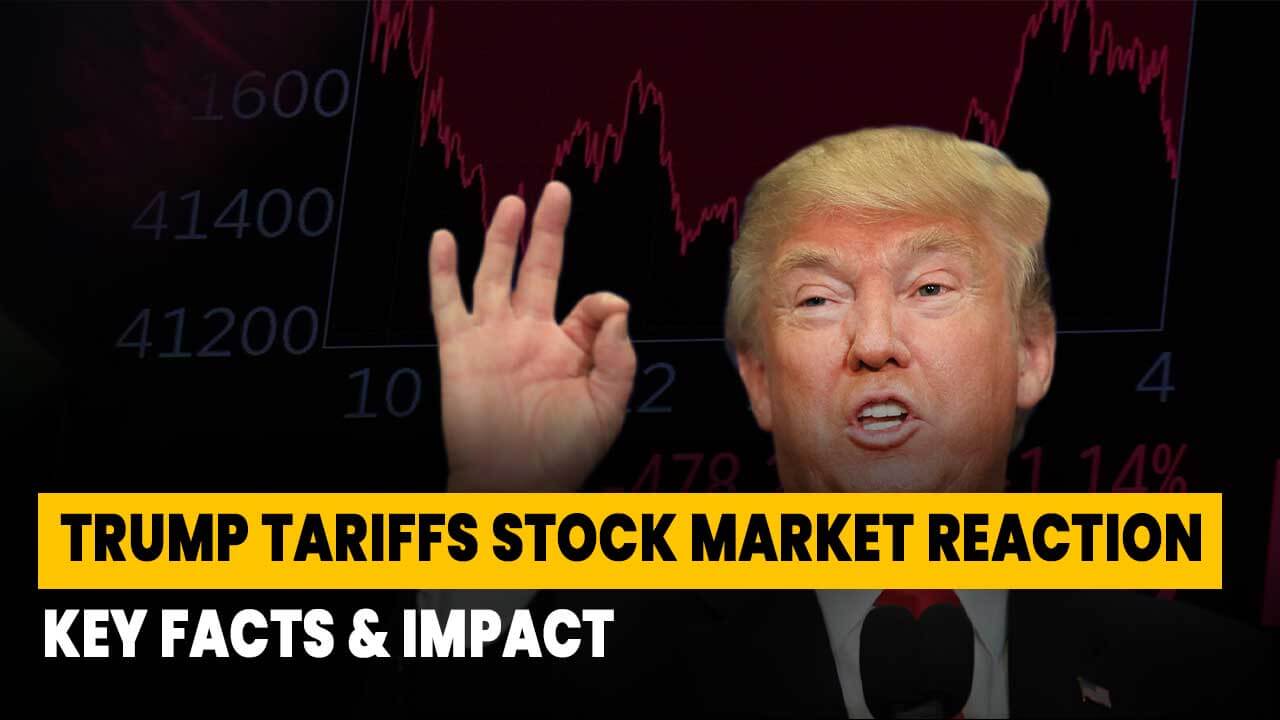
When President Trump returned to office, one of the first things that caught the attention of Wall Street attention was his renewed push for tariffs. Just like in his previous term, these trade moves are shaking up the stock market. Investors are watching closely as new tariffs are announced, global tensions rise and certain industries feel the pressure. And the ripple effects touch everything from your portfolio to everyday prices. So, here are the facts behind the Trump Tariffs Stock Market Reaction, its impact on stock markets, and what it means for the economy going forward. Let’s read ahead.
Recap of Trump’s Previous Tariff Strategies and Market Responses
Donald Trump introduced tariffs to reshape U.S. trade policies. His main goal was to protect American industries and reduce the trade losses especially with China. In fact, he believed that tariffs would force other countries to negotiate better trade deals. Though these tariffs covered a range of goods, steel and aluminum imports were heavily suffered. Similarly, the multiple rounds of tariffs on Chinese goods were another big move.
Basically, these measures were part of his “America First” policy to bring manufacturing jobs back to the U.S. Trump’s tariff strategies also targeted specific countries. Among these, China was the biggest focus as well as the European Union, Canada and Mexico. In response, these countries hit back with their own tariffs on American products which initiated a series of trade wars.
Market Responses to Trump’s Previous Tariffs
- Commodity Prices: Steel and aluminum prices in the U.S. were at their peak due to restricted imports.
- Consumer Goods Costs: Everyday products like electronics become expensive.
- Agricultural Exports Drop: U.S. farmers observed lower demand for soybeans and other crops from China.
- Business Investment Slowdown: Some companies delayed expansion plans due to uncertainty over trade rules.
- Supply Chain Shifts: Manufacturers also started looking for suppliers outside China to avoid tariffs.
- Trade Deficit Changes: Regardless of tariffs, the U.S. trade without Chinese goods remained high in some years.
These reactions show that tariffs impact various industries differently. In fact, some industries are benefiting while some industries are struggling for their profit margins. So, the full impact varied by sector where some adapted better than others.
Insights into the New Trump Tariffs
Since Trump is now president again, his approach to tariffs has both similarities and differences to his first term. However, most of his core beliefs on trade remain the same as he still sees tariffs as a way to protect American jobs and reduce reliance on foreign goods. Just like before, he is targeting steel, aluminum and technology industries thinking that foreign competition hurts U.S. manufacturers.
However, some things have also changed this time around. The global economy is different now where many countries are shifting their supply chains due to past trade wars. Another difference is that businesses and investors are more prepared this time. They already have adjusted supply chains in response to his earlier tariffs.
However, what hasn’t changed is the immediate backlash from other countries. Just like before, trading partners like China and the EU are likely to respond with their own tariffs which will definitely hurt U.S. exporters. In return, American consumers will again see higher prices on imported goods. And just like last time, some industries like steel and manufacturing could benefit while others like agriculture and retail might struggle.
Overall, Trump’s tariff strategy still follows his “America First” approach but the world has adjusted since his first term. So, the effects are a little different this time. However, the big question is whether these new tariffs will work better now or lead to the same trade battles as before.
Understanding Trump Tariffs Stock Market Reactions
When a president announces tariffs, the stock market observes sudden reaction. This is because investors don’t like surprises especially about trade policies that can hurt profits or disrupt supply chains. However, the immediate response depends on the extent of tariffs and the industries affected. In this regard, big moves cause panic selling while small expected changes might barely make a ripple.
Here’s how the Trump Tariffs Stock Market Reaction unfolded in response to new tariffs:
- Volatility Spikes: Stock prices tend to fluctuate wildly as traders rush to adjust to the new risks.
- Sector-Specific Moves: Companies directly hit by tariffs drop while protected industries often rise at that time.
- Currency Fluctuations: The dollar can also strengthen or weaken depending on all good or bad effects of tariffs on the U.S. economy.
- Safe-Haven Rushes: Money sometimes flows into gold, bonds or defensive stocks when tariffs raise fears of economic trouble.
- Short-Term vs. Long-Term Moves: The initial panic often cools down after a few days as investors digest the details and wait for real-world impacts.
These reactions show that stock markets are sensitive to trade policy. Though the first response feels wild, the longer-term effect depends on the adjustments of businesses and consumers.
Trump’s Tariffs Target Which Stocks and Sectors the Most?
Trump’s tariffs hit some industries harder than the others. Here are the sectors and stocks to which tariffs hit most impacted:
- Automakers & Auto parts face higher costs.
- Tariffs raised prices and reduced profit margins for technology & electronics.
- Retail & consumer goods are suffering from shortages and delayed shipments.
- Industrial machinery is getting short on imported equipment.
- Farmers suffer when other countries retaliate with tariffs on U.S. crops.
- Oil and gas companies also face higher costs for steel pipes and drilling equipment due to metal tariffs.
In short, these sectors show the uneven impact of tariffs. Regarding this, some companies are struggling while others are gaining.
Investor sentiment in the Trump’s Tariffs Era
Similar to different industries hit by tariffs, there are also different impacts on investors. Some of the investors are uncertain about the future economy while others are optimistic. The supporters appreciate his push for fair trade deals as it would benefit American companies in the long run. However, others thought that sudden tariffs would disrupt global supply chains and hurt corporate profits. In short, there is a clear divide of investor sentiments about the stock market. In general, the sectors which were exposed to international trade saw the biggest mood swings.
For example, industrial and technology stocks are sensitive to tariff news whereas domestic companies face less pressure. In this regard, investors are also going to shift money between protected sectors and sectors which are vulnerable to the next trade move. Meanwhile, long-term investors are trying to find something positive about the Trump stock market, but short-term traders are relying on the volatility. So, the constant back-and-forth between the U.S. and its trading partners has created opportunities for quick profits. But it also made steady growth harder to predict.
Global Trump Tariffs Stock Market Reaction
The impact of Trump’s tariffs is far beyond the U.S. and the related trading countries. Though global markets always move in sync with U.S. stocks, sometimes these operate in opposite directions. In the current situation, the export-driven economies are likely to slump when U.S. tariffs threaten their industries. As a result, emerging markets get hit as investors pull money out of risky assets.
However, commodity-focused markets remain fluctuating based on how much tariffs affect raw material prices. In this regard, the Chinese stock market shows the most dramatic swings when tariffs directly target Chinese goods. Some markets actually benefit from U.S. tariffs. Countries like Vietnam, India and Mexico see stock gains as companies shift production to avoid tariffs. Their currencies tend to strengthen too as foreign investment increases.
However, the ripple effects don’t stop at national markets. Global commodity prices swing based on expected changes in trade flows as shipping stocks react to anticipated shifts in trade patterns. Even cryptocurrency markets sometimes move as investors look for assets less tied to traditional trade systems.
Final Words
Though initial stock market reactions to tariffs are dramatic, global markets adjust within weeks. Investors eventually determine flexible companies which can adapt to the changing trade policies. But each new round of tariffs brings fresh uncertainty that keeps traders constantly reassessing their positions across borders. This ongoing sensitivity proves that in today’s economy, no major market moves in isolation anymore.
FAQs
What were the main objectives of Trump’s tariffs?
Trump’s tariffs aimed to protect U.S. industries, reduce trade deficits and encourage better trade deals, particularly with China, while following his “America First” policy.
Which sectors are most affected by Trump’s tariffs?
Industries like steel, aluminum, automotive, technology, agriculture and consumer goods are most impacted, with varying effects on profit margins and production costs.
How did the stock market react to Trump’s tariffs?
Stock market reactions included volatility spikes, sector-specific price moves, currency fluctuations, and safe-haven investment rushes, depending on the severity and scope of the tariffs.
Do Trump’s tariffs affect global markets?
Yes, U.S. tariffs influence global markets, affecting emerging economies, commodity prices and export driven industries, while causing shifts in investment and supply chains worldwide.
Can investors benefit from Trump’s tariff induced market changes?
Short-term traders may profit from volatility and sector specific moves, while long-term investors focus on flexible companies that adapt to trade uncertainties.
Don't miss
-
Martin Luther King Jr.: Civil Rights Leadership, Historic Marches, and Lasting Legacy
January 23, 2026
-
Solar Eclipse September 2025: Top USA Viewing Cities & Tips
October 6, 2025
-
Trump is Bringing Project 2025’s Anti-Climate Action Goals to Life
October 6, 2025
-
How the World Reacts to President Trump’s New Policies 2025?
October 6, 2025
-
How Trump’s Tariffs Are Impacting Asian Grocery Stores
October 6, 2025