 Fashion
Fashion
Fashion
The history of the 1950s male teenage fashion begins with a major cultural shift after World War II. For the first time in history, teenagers became a separate social group with their own tastes, money, and identity. Young boys no longer dressed only like their fathers. They wanted clothes that showed freedom, rebellion, and youth culture.
This decade created the foundation of modern male teenage fashion. Music, movies, and new social ideas shaped how teenage boys dressed in everyday life. From clean school outfits to rebellious street styles, fashion became a powerful form of expression.
The Rise of Teen Culture in the 1950s
Before the 1950s, teenagers were rarely treated as a special group. Most young boys wore simple versions of adult clothing. After the war, families had more money, and teenagers had spending power of their own.
This new freedom allowed boys to experiment with clothes, hairstyles, and accessories. Movies, rock and roll, and youth magazines influenced daily fashion choices. This change created the basis of 1950s male teenage fashion trends that we still recognize today.
-
Everyday School Outfits of Teenage Boys
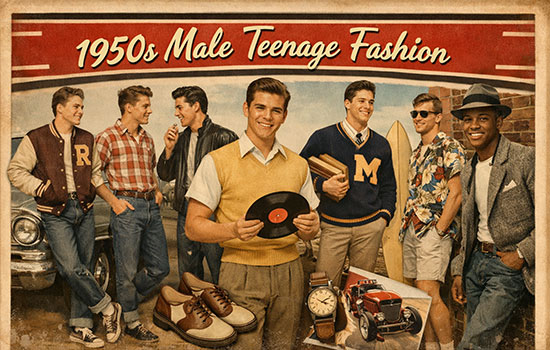
Most teenage boys in the early 1950s dressed neatly for school and family events. The common outfit included button-down shirts, cardigans, and pressed trousers. Sweaters were popular in winter, often worn over collared shirts.
Shoes were an important part of the look. Loafers, saddle shoes, and simple leather shoes were common. This clean and polite style showed discipline and good manners, which parents strongly valued during that time. This everyday look formed the backbone of 1950s male teenage fashion in the USA.
-
The Influence of Movies and Music
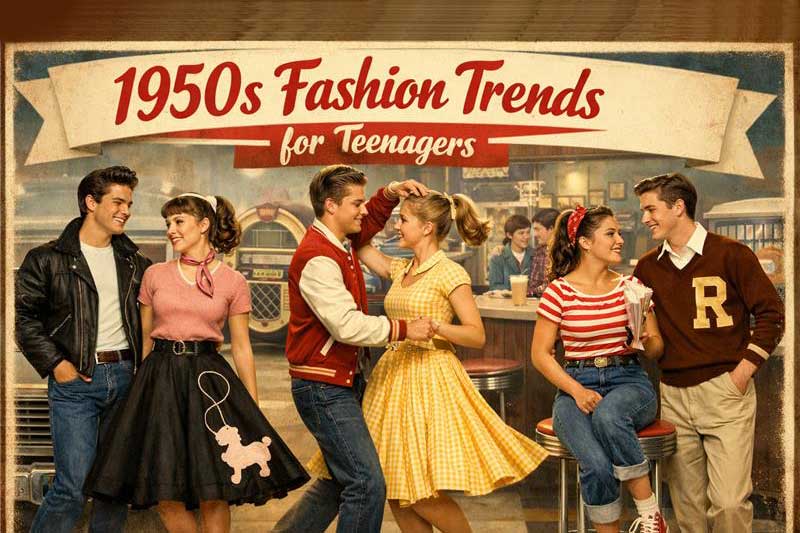
Hollywood played a major role in shaping 1950s male teenage fashion trends. Actors like James Dean and Marlon Brando changed how teenage boys wanted to look. Their characters showed rebellion, confidence, and emotional depth.
Leather jackets, plain white T-shirts, and denim jeans became symbols of independence. Rock and roll singers also influenced hairstyles and clothing choices. Teenage boys copied their idols to feel modern and fearless. This connection between media and fashion made teenage style more powerful than ever before.
-
Greaser Style and Rebel Fashion
One of the most famous looks of the decade was the greaser style. This group preferred leather jackets, rolled-up jeans, and slicked back hair. Their fashion showed toughness and rejection of strict social rules.
The greaser look became a symbol of youth rebellion. It was simple but bold. Even today, this style represents the strongest image of 1950s male teenage fashion in popular culture. This trend also showed how clothing could express personality and social identity.
-
Preppy and Clean-Cut Teenage Fashion
Not every teenager wanted to look rebellious. Many boys preferred a clean-cut preppy style that became popular among teenagers in the 1950s. This look included polo shirts, sweaters, chinos, and tidy hairstyles.
This style was common in schools, colleges, and middle-class families. It showed discipline, ambition, and respect for tradition. Preppy fashion balanced the rebellious trends and represented the mainstream face of male teenage fashion. Both styles existed side by side and gave teenagers different ways to express themselves.
-
Sports and Jock Influence on Teen Fashion
Sports also shaped 1950s male teenage fashion trends. Many boys wore varsity jackets, letterman sweaters, and athletic shoes. These items showed school pride and social status.
The jock style was clean, casual, and practical. It worked well for school, sports events, and weekend activities. This trend connected fashion with teamwork, discipline, and youth energy. It also helped popularize casual clothing in daily teenage life. Many of these styles were part of wider teenage fashion in the 1950s that shaped youth culture across America.
-
Hairstyles and Grooming Trends
Fashion was not only about clothes. 1950s teen hairstyles for males were equally important in fashion. The most popular look was the slicked-back style using hair cream or pomade.
Some boys preferred short and neat cuts, while others liked longer styles with waves. Grooming showed maturity and self-confidence. Teenagers spent time shaping their hair to match movie stars and singers. This focus on grooming helped create a complete fashion identity.
-
Regional Differences in the USA
1950s male teenage fashion in the USA changed slightly from region to region. In cities, trends appeared faster due to movies and music. In small towns, styles remained more traditional.
Southern states favored lighter fabrics due to the weather. Northern areas used more layers and heavier materials. Despite these differences, most teenagers followed similar basic trends across the country. This shows how national media created a shared fashion culture.
Why 1950s Teen Fashion Trends Still Matter Today
The importance of 1950s male teenage fashion trends goes beyond clothing. This decade created the idea that teenagers could shape culture. Fashion became a way to express freedom, rebellion, and identity.
Many modern styles, such as denim jeans, leather jackets, and casual T-shirts come directly from this era. The 1950s proved that youth fashion could influence the entire society. Today, designers and historians still study this period to understand the roots of modern style and its influence on fashion trends for 2026.
Modern Lessons from 1950s Teen Style
Modern readers can learn many lessons from the male teenage fashion of the 1950s. The styles were simple, practical, and meaningful. Each outfit told a story about class, culture, and personal values.
Writers at WordsCraze explore vintage fashion history and how classic youth styles continue to inspire modern design. The 1950s show that true style is not about price but about identity and confidence. This timeless lesson makes the decade unforgettable.
Conclusion
The history of 1950s male teenage fashion is the story of a generation finding its voice. From clean school outfits to bold rebel looks, teenage boys used fashion to show who they were and who they wanted to become. Through movies, music, sports, and daily life, fashion became a powerful tool of expression. The trends of this decade still shape modern style and youth culture. By exploring this history, we understand not only the clothes teenage boys wore, but also the birth of teenage identity and youth culture itself.
FAQs
What did teenage males wear in the 1950s?
Teenage males in the 1950s commonly wore button-down shirts, plain T-shirts, cardigans, sweaters, and pressed trousers for school and family events. Denim jeans became popular for casual wear, especially among rebellious youth. Shoes like loafers, saddle shoes, and leather lace-ups completed the typical 1950s male teen fashion look.
What were the most popular 1950s male teenage fashion trends?
The most popular 1950s male teenage fashion trends included clean-cut preppy styles, greaser rebel outfits, and sports inspired clothing. Preppy teenage fashion in the 1950s featured polo shirts and chinos, while rebel styles included leather jackets and jeans. Varsity jackets and letterman sweaters were also widely worn by teenage boys.
How did 1950s male teenage fashion in the USA differ from adult fashion?
1950s male teenage fashion in the USA was more casual and expressive than adult fashion. While adult men dressed formally, teenage boys experimented with denim, leather jackets, and bold hairstyles. This shift marked the first time 1950s teenage male fashion reflected youth identity rather than copying adult styles.
What were the common 1950s teen hairstyles for males?
In the 1950s, male teen hairstyles were neat but stylish. The most popular look was slicked-back hair using pomade or hair cream. Some teenage boys preferred short and clean cuts, while others followed movie stars with slightly longer, wavy styles. Grooming was an important part of the overall 1950s male teen fashion.
Don't miss
-
Top 10 Most Beautiful Women in USA 2026: Hollywood Actresses, Musicians & Influential Icons
February 27, 2026
-
Top 10 Most Beautiful Korean Actresses in 2026: Global Icons & Rising Stars
February 25, 2026
-
Top 10 Most Beautiful Russian Actresses in 2026: Famous & Modern Stars
February 20, 2026
-
Most Beautiful Women in the World: Top Korean, American & Russian Actresses
February 13, 2026
-
Fashion Trends 2026: Top Women’s, Men’s & Seasonal Style Predictions in the USA
January 16, 2026