 Packaging
Packaging
Packaging
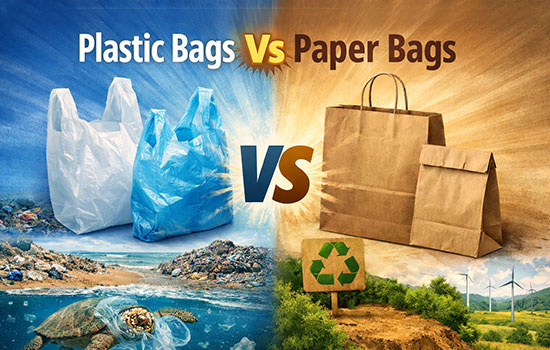
Plastic bags were used for a long time. They were cheap and available everywhere. Grab one, throw it, forget it. That habit didn't age well. Landfills filled up. Oceans suffered. Even in regular streets, you could see plastic bags taking over.
Paper bags did not jump right into the limelight. To understand what is a paper bag and its types, people stopped and noticed its advantages. It is no longer a matter of trends to use paper bags today. It is all about responsibility, reality and thinking about long term safety.
This WordsCraze blog will take you through a comparison between paper bags and plastic bags, showing which one is more advantageous.
Environmental Impact of Plastic And Paper Bags
Plastic bags do not biodegrade, instead they break down into microplastics that contaminate soil, water, and the food chain. Their environmental impact continues long after disposal.
Paper bags naturally decompose and do not pollute the environment. Even if disposed of improperly they break down without causing lasting damage.
Green Resources and Sustainability
Paper bags are made from renewable resources, primarily trees and are often sourced from sustainable forestry or recycled materials. Plastic bags are dependent on fossil fuels which are not a renewable resource. The use of paper bags shows that a company isn't just thinking of short term convenience.
Recycling Made Easy
Many people assume plastic bags are recyclable but in reality most cannot be processed. They often clog recycling machines, contaminate other materials and end up in landfills.
Paper bags are easy to recycle and widely accepted by recycling facilities. Even reused paper bags can be processed again without complicated procedures, making them highly efficient in minimizing waste.
Durability and Strength of Paper Bags
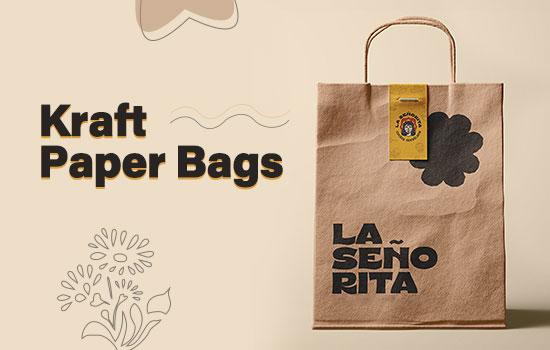
Paper bags are not delicate nowadays. SOS bags, Euro totes and kraft paper bags are made with structure and strength. They are reinforced at the handles and have thick paper walls that make them be able to carry some weight without tearing.
The overloading of plastic bags causes its stretch, sagging, and failure. Paper bags hold shape. The fact that the reliability creates confidence in the customers, even when they are not actively aware of it.
Safe for Food and Daily Essentials
Paper bags are highly relied on in the packaging of food stuffs since they do not release any toxic chemicals when exposed to heat. They also allow air flow and this keeps them fresh.
This is the reason why bakeries, cafes, grocery stores, and restaurants use paper bags to take out, bread, produce, and snacks. Plastic just fails to do the same.
A Better Appearance For Branding
Paper bags feel intentional. They feel solid. Even before the product gets home, they do not look like garbage. Paper bags elevate brand perception whether in small boutiques or the large retail chains. They are usually reused by the customers for storage or gifting and can be used long after purchase to promote the brand much further. Discover the benefits of paper bags for business and how they can enhance customer loyalty.
Plastic bags will never get such a second life.
Customization Options for Businesses
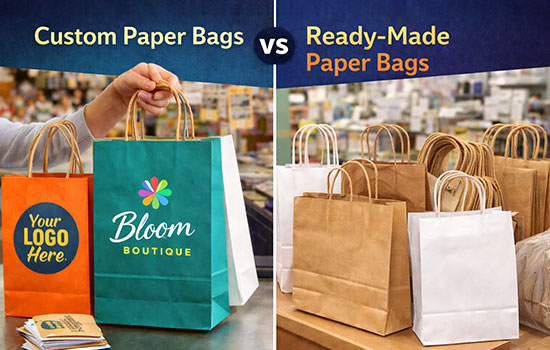
Paper bags are highly customizable. You can customize everything from shape to sizes, colors and printing techniques. Printing stays sharp. Finishes stand out. Colors remain consistent.
Whereas, plastic bags are mass produced and do not offer customization like that.
Common customization options for paper bags are:
- Offset and digital printing
- Foil stamping
- Embossing and debossing
- Matte and gloss finishes
- Die-cut or twisted handles
Compliance with Plastic Bag Bans
Bans on using plastic bags and an increase in the use taxes are common across the world. Companies that continue to use plastics are fined, limited, and increasingly being accused by their customers.
In most areas, paper bags are environmentally-friendly. The switching will stop the disruption in the future and defend the brand image.
Demand of Modern Customers
Modern customers are concerned with sustainability. They do not necessarily discuss it, but it influences their purchase decisions. Most people embrace the use of paper bags in stores as opposed to plastic. Paper bags show off the message of responsibility that creates trust with time.
Short-term Savings Long-term Value
Plastic bags might appear less expensive but there are some hidden expenses that accumulate. Disposal fees. Regulatory fines. Environmental damage. Brand perception loss.
Paper bags provide a superior long term value in terms of branding, compliance as well as customer loyalty. They are usually self paying.
The Comparison of Paper Bags and Plastic Bags
In order to know why paper bags are superior, it is better to compare them to each other. The contrast is even greater than what people would expect.
| Feature | Paper Bags | Plastic Bags |
|---|---|---|
| Environmental Impact | Biodegradable and compostable | Non-biodegradable, breaks into microplastics |
| Decomposition Time | Weeks to a few months | Hundreds of years |
| Recycling Rate | High and widely accepted | Low and often rejected |
| Material Source | Renewable (trees, recycled paper) | Non-renewable (petroleum) |
| Food Safety | Safe, breathable, chemical free | Can trap moisture and chemicals |
| Durability | Strong with reinforced bottoms | Stretchy, weak under weight |
| Brand Appearance | Premium, professional look | Cheap and disposable |
| Custom Printing | Excellent print quality | Limited and inconsistent |
| Reusability | Easily reusable | Rarely reused |
| Regulatory Compliance | Eco-friendly and compliant | Increasingly banned or taxed |
The reason behind this massive switch of businesses can be explained by this table.
Final Thoughts
The use of paper bags is better for the world than plastic bags. They are more responsible, safer, stronger and recyclable. To the business, they are environmentally friendly and help to build brand image. The customers prefer them due to their many benefits. Paper bags prove to be a smarter choice every day.
FAQs
Are paper bags more environmentally friendly than plastic bags?
Yes. Paper bags are biodegradable and decompose naturally, whereas plastic bags stay on the ground for hundreds of years and cause microplastic pollution.
Can modern paper bags carry the same weight as plastic bags?
The paper bags have enhanced bottoms, powerful handles that allow the carrying of groceries, clothes and food items of heavier weight with ease.
Are paper bags safe for packaging food?
Paper bags are common in the storage of food as they are breathable, as well as free of chemicals and their ability to keep the food fresh, especially for baked foods as well as the hot foods.
Are paper bags easily recyclable?
Yes. Most recycling facilities accept paper bags and can be recycled with ease through multiple recycling.
Why do businesses prefer paper bags over plastic bags?
Paper bags have superior branding, meet the eco regulations, and enhance customer perception benefiting the sustainability goals.
Don't miss
-
How to Choose the Right Essential Oil Box Packaging for Retail Success?
June 17, 2026
-
How to Turn Gift Boxes into Electronics Organizers (DIY Guide)
April 30, 2026
-
Why Boutique Boxes Are Redefining Retail Packaging with Style and Identity
April 30, 2026
-
Top 20 Global Packaging Companies Leading the Industry in 2026
March 17, 2026
-
Top 10 Packaging Companies in the USA (2026 Industry Leaders)
March 16, 2026
.jpg)